โรคหลอดเลือดสมอง survivor: 66 years old - โรคหลอดเลือดสมอง Center
Patient Description:
A 66-year-old female presented with a sudden onset of left-sided weakness, slurred speech, and mouth deviation to the left. She also experienced difficulty in bed mobility and daily living activities.
Case History:
The patient has had a history of hypertension for the past three years along with dilated cardiomyopathy. She was admitted to the emergency room due to the sudden onset of symptoms and was intubated because of decreased oxygen saturation. Subsequently, she was transferred to the intensive care unit and treated with a variety of medications.
Physical Examination Results:
Facial asymmetry was observed with mouth corners deviated to the left. The patient was unconscious and not oriented. Left-sided muscle tone was decreased. Superficial, deep, and integrated cortical reflexes were decreased, and plantar reflexes were flexed. Cranial nerve examination showed involvement of the facial nerve (sensory and motor parts), balance part of the vestibulocochlear nerve, Broca's aphasia, and dysphagia.
Results of pathological tests and other investigations:
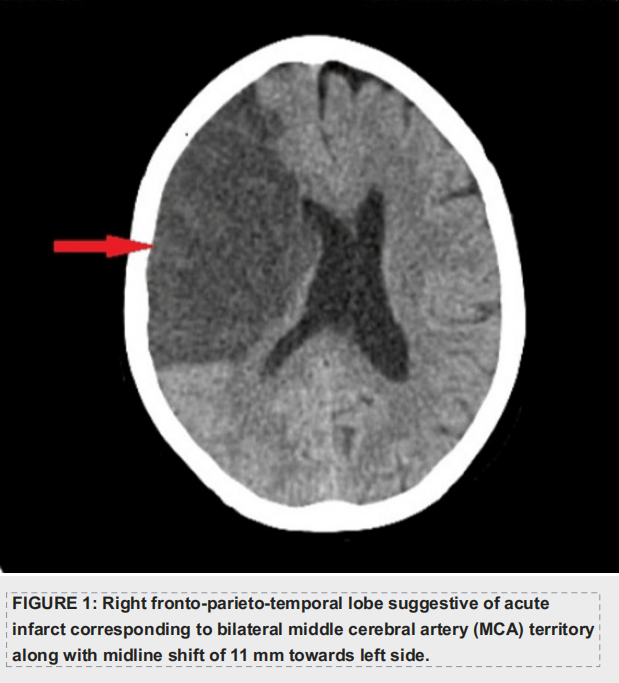
Magnetic resonance imaging (MRI) revealed a distinct wedge-shaped intraaxial hypodensity involving the grey and white matter of the right frontal, parietal, and temporal lobes, suggesting acute infarction corresponding to the bilateral MCA territory, accompanied by an 11-mm midline shift.
Treatment plan:
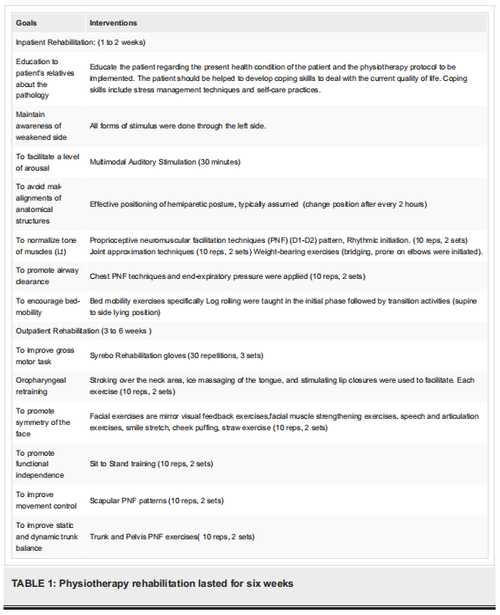
Inpatient การฟื้นฟูสมรรถภาพ (1 to 2 weeks): Various treatment measures were implemented, such as multimodal auditory stimulation, effective positioning of the hemiplegic posture, thoracic PNF techniques and bed activity training.
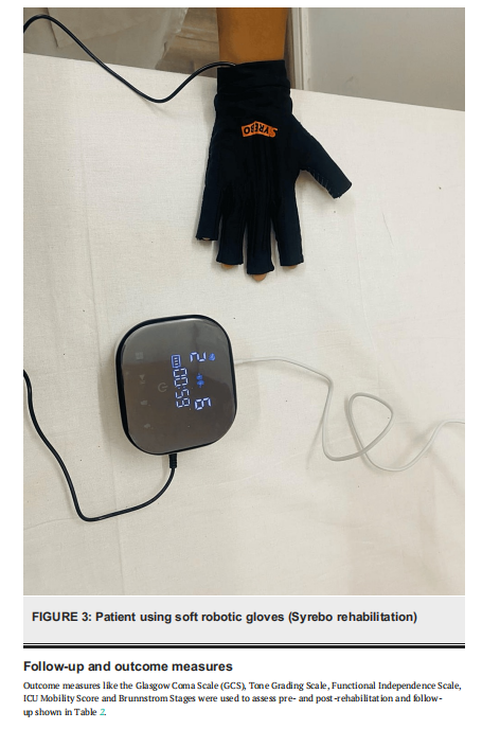
Outpatient การฟื้นฟูสมรรถภาพ (3 to 6 weeks): Oropharyngeal retraining, facial exercises, sit-to-stand training, scapular PNF pattern, etc. were carried out using Syrebo การฟื้นฟูสมรรถภาพ gloves.
Expected Outcome of the Treatment Plan:
Improved motor function, reduced complications, and enhanced patient's ability to perform activities of daily living.
Actual Outcome:
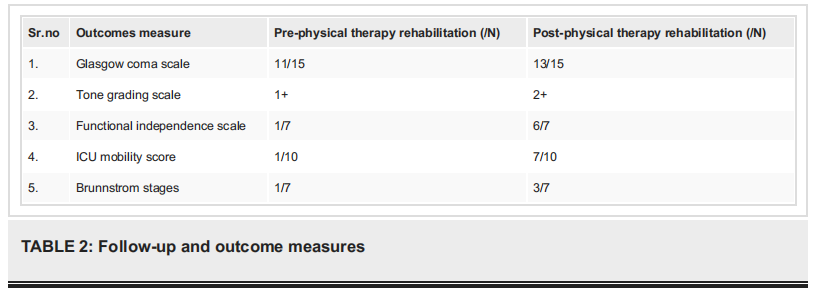
The Syrebo Gloves การฟื้นฟูสมรรถภาพ program proved advantageous, featuring notable enhancements in motor function, facial symmetry, and functional independence. The patient's quality of life improved, and she could be more vigorous in her daily routines. Continuous engagement in home exercises and regular strengthening sessions sustained such improvements over time.